Debuting in 1978 alongside the modern minifigure, LEGO Space pioneered non-licensed narrative worldbuilding. Across two decades, the theme progressed from peaceful exploratory lunar geology to rival faction combat, introducing kinetic magnetic coupling and specialized cockpit canopies.
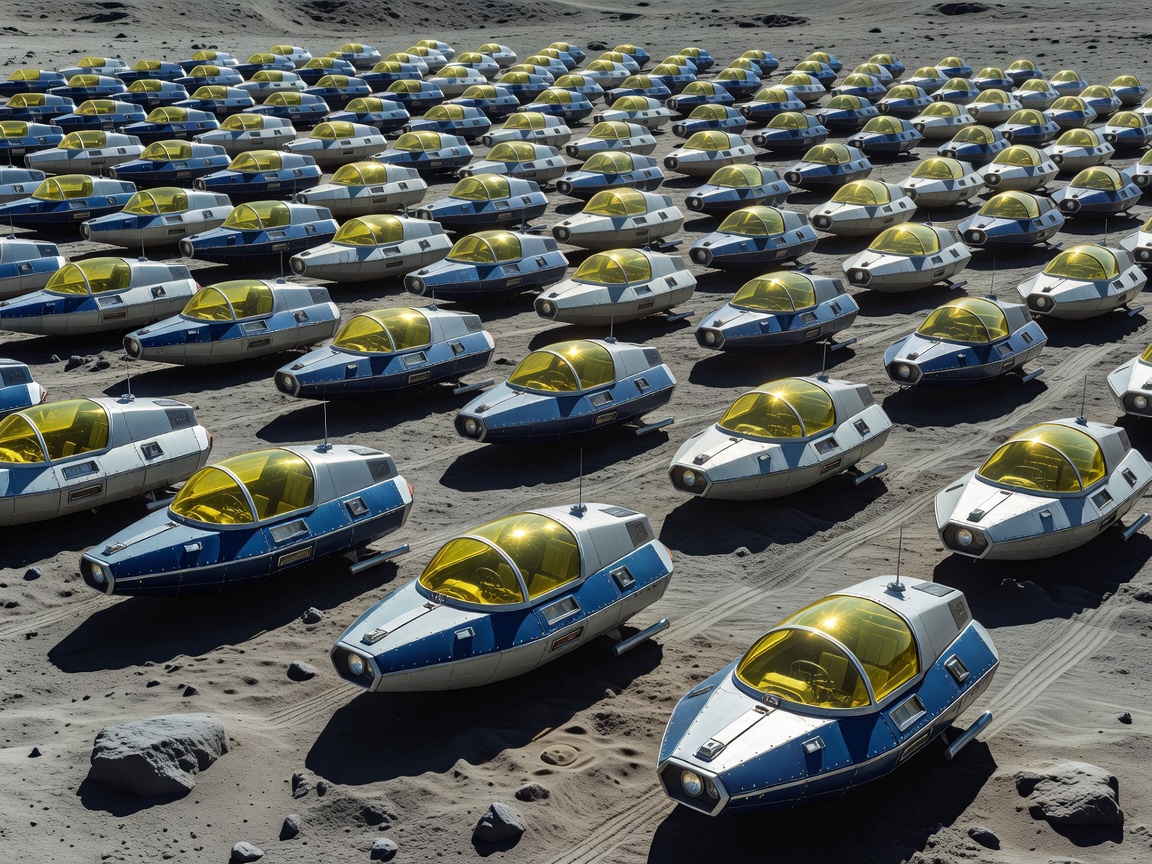
1. The Classic Space Foundation (1978–1987)
Classic Space established the quintessential sci-fi aesthetic: light grey and blue airframes accented with trans-yellow canopies, white antennal arrays, and crater-molded 32x32 moon baseplates. Minifigures appeared in red, white, yellow, blue, and black spacesuits adorned with the iconic gold planet and red swoosh insignia.
From an engineering perspective, Classic Space models relied almost purely on standard System geometry. Cockpits used 33-degree and 45-degree slope bricks, while propulsion thrusters were built from stacked cylinder and cone bricks. Technic pins were not yet widespread in System sets; hinge plates (part 3937 and 3938) provided the only angular articulating surfaces.
2. Faction Stratification & Design Evolution
In 1987, the narrative framework shifted from a single unified space agency toward distinct opposing factions characterized by disciplined color theory and mechanical gimmicks:
Space Faction Architectural Matrices
| Faction | Years Active | Primary Color Scheme | Signature Mechanical Feature |
|---|---|---|---|
| Classic Space | 1978–1987 | Light Grey, Blue, Trans-Yellow | Pure exploratory rovers; crater terrain coupling |
| Blacktron (I) | 1987–1988 | Black, Yellow trim, Trans-Yellow | Modular multi-section craft swapability |
| Space Police (I) | 1989 | Black, Blue, Trans-Red | Universal transportable prisoner lockup pods |
| M-Tron | 1990–1991 | Red, White, Trans-Neon Green | Magnetic cargo crane couplings (Cylindrical Magnets) |
| Blacktron Future Generation (II) | 1991–1992 | White, Black, Trans-Neon Green | Cockpit pod separation onto wheeled land bases |
| Ice Planet 2002 | 1993–1994 | Deep Blue, White, Trans-Neon Orange | Articulated rocket gantries; ski attachments |
3. The Introduction of Kinetic Magnetic Modules
In 1990, M-Tron revolutionized interactive System play through the introduction of permanent ferrite magnet assemblies (parts 73092 and 2607). These cylindrical magnets, encased in red or black housings with internal pivoting cores, allowed cargo crates, satellite payloads, and exploration pods to be picked up effortlessly by articulated crane arms without requiring manual stud alignment.
This magnetic coupling standard bridged across multiple concurrent sub-themes: Space Police II detention cells and Ice Planet orbital rocket payloads shared identical magnetic polarity and dimensional spacing, enabling cross-faction cargo interchangeability.
4. The Trans-Color Legacy & Polymer Rarity
The vintage space era is celebrated for its distinctive translucent Polycarbonate (PC) elements. Trans-Neon Green (formulated to fluoresce intensely under ultraviolet illumination) became an iconic marker of the 1990s aesthetic across M-Tron and Blacktron II. Later, Ice Planet 2002 introduced Trans-Neon Orange chainsaws and massive bubble canopies.
Because these translucent components were molded from brittle Polycarbonate rather than flexible ABS, vintage hinges and canopy hinge-clips are exceptionally prone to fatigue cracking when stressed. Collectors must inspect clip tensions carefully and avoid forcing vintage canopies over stiff hinge pins.