Restoring pre-owned or bulk estate LEGO collections requires methodical discipline. Inappropriate detergents, excessive water temperatures, or harsh solvents can permanently strip mold gloss, erode pad-printed decals, or warp micro-tolerances required for clutch power.
1. Thermal and Chemical Safety Limits
ABS has a glass transition temperature of approximately 105 °C, but internal residual injection molding stresses can begin relaxing at significantly lower temperatures:
- Maximum Safe Washing Temperature: 40 °C to 45 °C (104–113 °F). Never exceed 50 °C. Washing bricks in hot dishwasher cycles or boiling water causes irreversible warping of stud tubes and loss of clutch power.
- Approved Surfactants: Mild liquid dish soap or pH-neutral liquid laundry detergents devoid of bleach or fabric softeners.
- Prohibited Solvents: Acetone, nail polish remover, ethyl acetate, isopropyl alcohol in high concentrations on printed elements, and petroleum distillates. Acetone instantly dissolves ABS through polymer solvation.
2. Standard Manual Decontamination Protocol
For general grime, dust, and non-stick residue on bulk bricks:
- Mechanical Disassembly: Disassemble all bricks, plates, and minifigures completely. Washing assembled structures traps dirty water within inner cavities, creating stagnant mold niches.
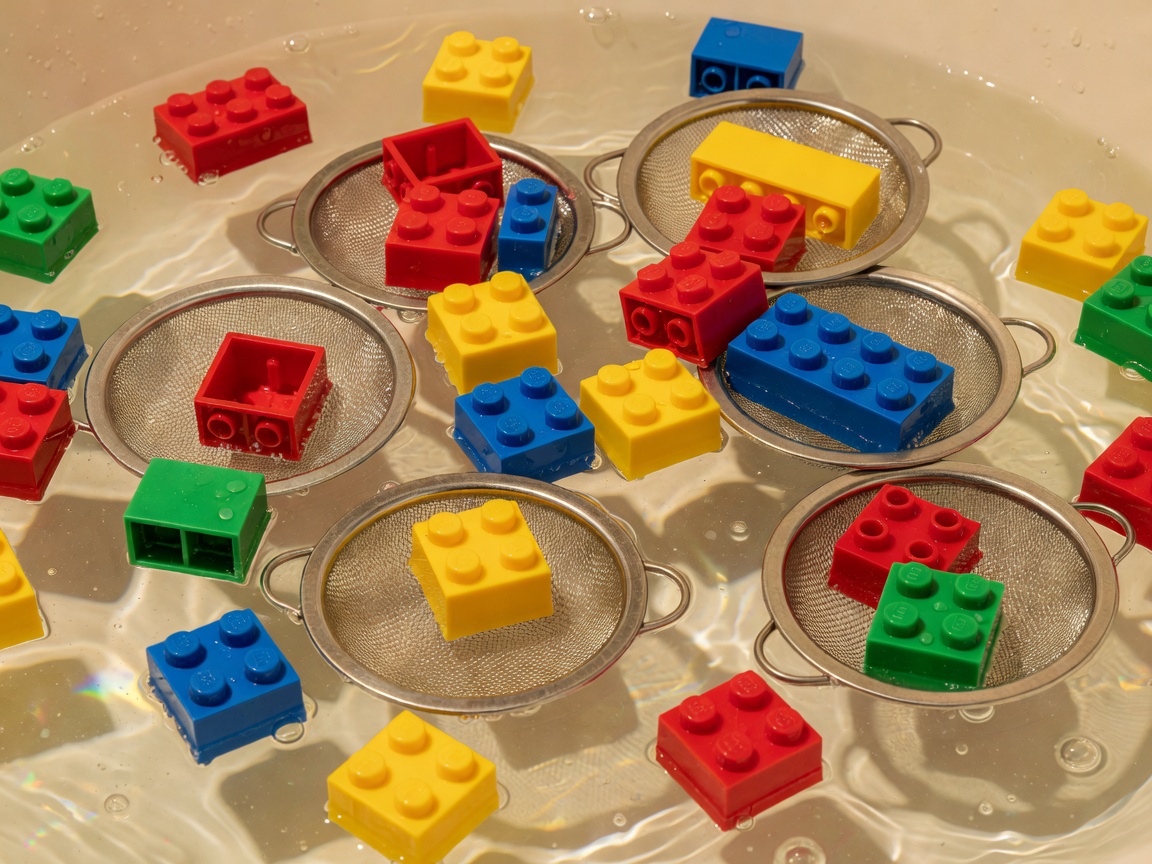
- Soaking Phase: Immerse elements in a clean basin of lukewarm water (35–40 °C) mixed with 15–30 ml of mild surfactant for 60 to 90 minutes.
- Agitation: Swirl the elements gently by hand or utilize a soft synthetic-bristle brush (such as a soft cosmetic brush) for recessed studs and underside ribs. Never use abrasive scouring sponges.
- Rinse & Centrifugal Drain: Rinse thoroughly in cold clean water through a kitchen colander or mesh laundry bag. Spin gently or shake to evacuate water trapped inside the hollow studs.
- Air Drying: Spread the bricks across clean cotton bath towels in a single layer in a well-ventilated room out of direct sunlight. Allow 24 to 48 hours for complete evaporation. Avoid electric blow dryers or domestic tumble dryers.
Washing Methodology Pros and Cons
| Method | Pros | Cons & Risks |
|---|---|---|
| Manual Basin Bath | Total control; safest for printed parts and transparent pieces | Labor intensive for large multi-kilogram estate lots |
| Mesh Bag Washing Machine (Cold) | Fast throughput for bulk non-printed elements | Risk of surface micro-scratches from brick-on-brick drum collision |
| Ultrasonic Cleaner (Benchtop) | Penetrates deep inside tube cavities without scrubbing | Can delaminate fragile vintage foil stickers and prints |
3. The Retrobright Process for Yellowed Light Grey Bricks
Vintage light grey and white elements from the 1980s and 1990s frequently exhibit severe yellow-brown discoloration due to UV oxidation of bromine flame-retardants incorporated into early polymer formulas. This yellowing can be reversed through hydrogen peroxide (H2O2) photo-oxidation:
Under ultraviolet light (approx. 395 nm or direct midday sunlight), liquid hydrogen peroxide generates hydroxyl free radicals (OH•) that react with discolored conjugated double bonds in oxidized bromine complexes, breaking them down into colorless halide derivatives.
- Bath Concentration: A 3% to 6% food-grade or beauty-grade hydrogen peroxide liquid solution. Higher concentrations (12%+) work faster but significantly increase the risk of surface marbling (white streaking) and skin burn hazards.
- Submersion Chamber: Place yellowed bricks inside a transparent glass or clear polypropylene container filled with the peroxide bath. Ensure elements remain fully submerged; floating bricks will develop uneven tide-lines. Use clear plastic mesh or glass weights to hold them under.
- UV Illumination: Expose the container to direct outdoor sunlight for 4 to 8 hours, or under a 395 nm UV LED strip array inside a reflective foil-lined enclosure. Turn or stir elements every 60 minutes for uniform exposure.
- Inspection: Monitor color recovery regularly. Remove immediately once the target factory hue is restored; over-exposure induces irreversible chalky surface degradation.