The standard LEGO minifigure, introduced in 1978, is an intricate assembly of distinct polymer components subject to mechanical friction, stress fractures, and photochemical degradation. Archival management requires understanding material incompatibilities and environmental decay mechanisms.
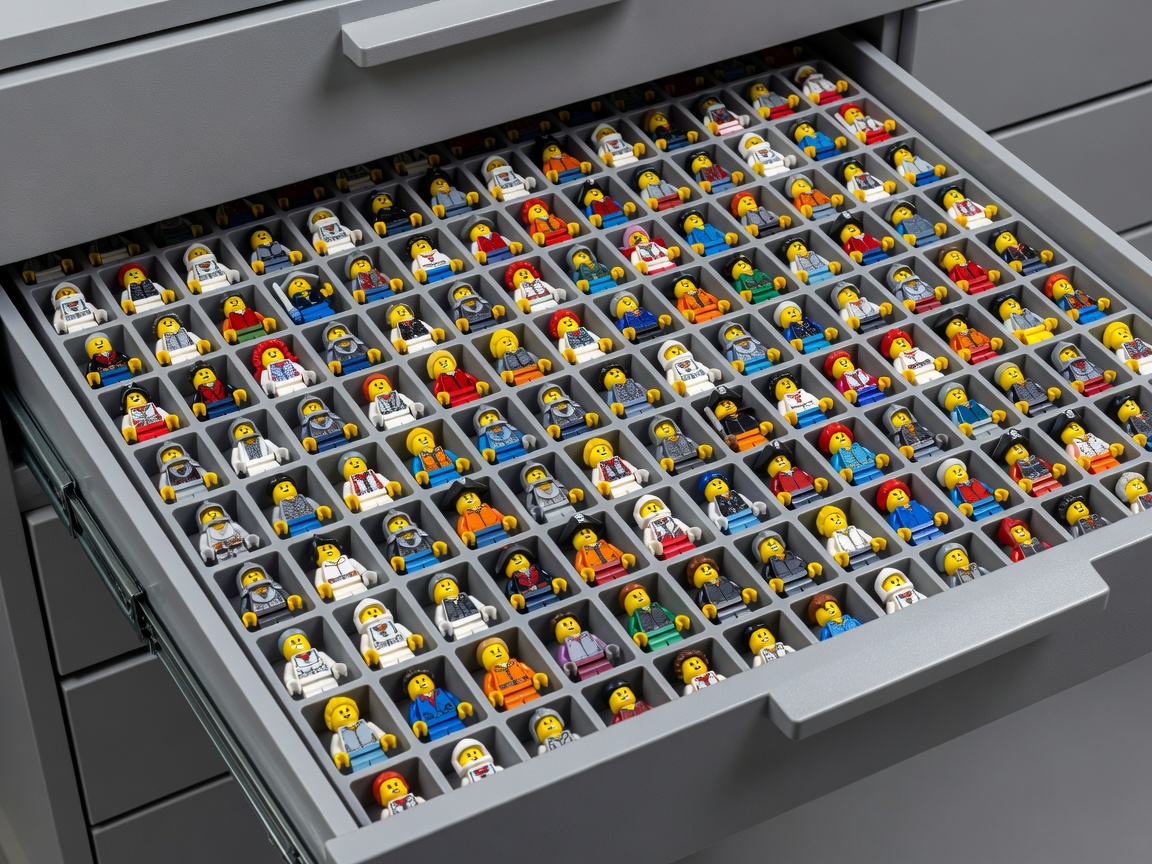
1. Anatomy of Polymer Stress in Minifigures
Unlike monolithic bricks, a complete minifigure consists of interacting parts molded from differing plastics:
- Torso Shell & Legs: Injection-molded Acrylonitrile Butadiene Styrene (ABS). High rigidity and scratch resistance, but vulnerable to outward hoop-stress cracking along lateral seams.
- Arms & Hands: Molded from Polycarbonate (PC) or modified POM (polyoxymethylene) to provide high dynamic flexure during repetitive accessory gripping.
- Hips & Leg Pins: POM / Acetal plastics with inherent natural lubricity to maintain leg articulation without galling the inner torso cavity.
The most prevalent failure mode in long-term collections is the dreaded torso crack running upward from the base of the torso along the armpit seam. This occurs because the internal hip prongs exert continuous outward tension against the ABS torso shell. If stored in fluctuating temperatures or dry atmospheres, polymer shrinkage over 15+ years creates hoop stresses exceeding the yield strength of aged ABS, precipitating spontaneous fractures.
2. Light Degradation & UV Protection
Sunlight and high-Kelvin fluorescent lighting emit ultraviolet radiation in the 290–400 nm band. UV photons possess sufficient energy to rupture carbon-carbon bonds within the butadiene rubber phase of ABS. This photolytic cleavage causes:
- Severe yellowing (phenolic radical formation from residual flame-retardant bromines and polymer stabilizers).
- Surface chalking and embrittlement, reducing the clutch tension of head studs and neck posts.
- Fading of pad-printed (tampography) torso decals, particularly red and yellow organic pigment inks.
Storage Media Comparison for Minifigures
| Storage System | Pros | Cons | Recommended Use |
|---|---|---|---|
| Wall-Mounted Acrylic Cases | High visibility; dust-free seal; aesthetic display | Requires verified UV99 acrylic; expensive per unit | Primary display figures (kept out of direct sun) |
| Polypropylene (PP) Multi-Drawers | Acid-free; chemically inert; cost-efficient density | Figures can rub during rapid drawer movement | Bulk collections and building stock |
| Acid-Free Polyethylene Bags (Zipper) | Total scratch protection; individual isolation | No display value; requires non-PVC specification | Long-term vault archiving of rare figures |
| Standard PVC Soft Pouches | Inexpensive; widely available | Severe hazard: plasticizer migration causes sticky surface degradation | Never use for LEGO polymers |
3. Temperature and Relative Humidity (RH) Parameters
Archival repositories for plastic collections should operate under climate-controlled conditions:
- Temperature: Maintain between 18 °C and 22 °C (64–72 °F). Prevent exposure to uninsulated attics or hot vehicle trunks, where temperatures exceeding 45 °C cause plasticizer sweat and structural distortion.
- Relative Humidity: Maintain between 40% and 50%. Lower humidity increases electrostatic charge, attracting abrasive ambient dust, while humidity exceeding 65% encourages mold growth inside accessories featuring cloth capes and canvas sails.
4. The Danger of Baseplate Stud Tension
Displaying minifigures firmly pressed onto rigid baseplate studs for years introduces continuous outward expansion force against the hollow heel tubes inside the legs. Over time, this results in vertical hairline fissures in the back of the calves.
To eliminate heel cracking on display, mount figures on modified 1x2 plates with single centered studs (jumper plates), positioning the single stud loosely between the feet rather than jamming both hollow heels over separate rigid studs.